
We're back home again. We had a good time in Patagonia, but we had clearly used all our luck for good weather in Antarctica. In Chili we got one decent day where we could actually see the mountains, and the same thing in Argentina. As a result I didn't take many shots with spectacular mountain backdrops, unfortunately. The scenery was stunning though and we really enjoyed driving and walking around. Our 16km hike in total darkness to get to the perfect location for sunrise on Mt. Fitzroy was a complete failure - low clouds and no mountain to be seen - but it was good fun and good exercise. We'll probably go back there next year and hope for better conditions.
31 December 2012

17 December 2012
Back from Antarctica
We're back in Ushuaia. Antarctica was awesome. The weather was extremely good - as a matter of fact a bit too good. Lots of sunshine and blue skies, not something I would pick for this place. But I guess it's better than being stuck on the ship because of storms. We got none of that. Temperatures were mild, not a lot of wind, and we didn't miss a single landing. We saw penguins, whales, penguins, leopard seals, penguins, dolphins, and lots of penguins. One of the highlights was cruising between giant icebergs in a small zodiac - can't wait to start processing the images. But I'll have to, because the next two weeks we will spend in Argentina and Chili.
 |
| View from the ship on yet another calm and sunny day. |
06 December 2012
Double Success In Travel Photographer Of The Year!
I just got an email from the Travel Photographer Of The Year Awards with some great news: I won two First Prizes in this year's competition!
In the landscape category (Wild Planet) I won First Prize for a series of four images from Namibia. All images were shot at night and feature quivertrees and stars, lots of stars.
This is what the judges said about the images:
'The sky is often overlooked when thinking about the wildness of this planet but what better example is there than the sky at night and the heavens filled with stars? Marsel's images were shot using small flashlights and natural starlight to illuminate quiver trees in the Namibian desert.'
In the landscape category (Wild Planet) I won First Prize for a series of four images from Namibia. All images were shot at night and feature quivertrees and stars, lots of stars.
This is what the judges said about the images:
'The sky is often overlooked when thinking about the wildness of this planet but what better example is there than the sky at night and the heavens filled with stars? Marsel's images were shot using small flashlights and natural starlight to illuminate quiver trees in the Namibian desert.'
 |
| One of the four winning shots from Namibia. |
The second First Prize is for our timelapse video 'Namibian Nights'. We started working on this timelapse project in 2011 and we put a lot of time and effort in to get the results we were after. This summer I selected and processed all the images for all the different scenes, and after that Daniella did all the editing. We are really happy with the results and we're even happier winning First Prize in this prestigious competition!
The winning images and videos from 2012 will be exhibited at the Royal Geographical Society in London next year. After that, the images will form part of a new TPOTY international touring exhibition.
We will put the video online as soon as we're back home.
Update 15/11: The winning 'Namibian Nights' timelapse video is now online. Check it out here.
28 November 2012
Drake Passage
Ok, this is it. We're aboard the ship, heading towards Antarctica. The weather is calm, and so is the sea. That's nice, because the next two days we'll be crossing the infamous Drake Passage.
The 800 kilometres (500 mi) wide passage between Cape Horn and Livingston Island is the shortest crossing from Antarctica to the rest of the world's land, and it's known as the roughest sea on the planet. We don't particularly like rough seas, so let's just hope we don't get into the same problems as the Antarctic vessel Clelia II had to deal with a few years ago:
If it stays as calm as it is today, then there won't be much to see other than a whole of water and sea birds. The lower deck at the back of the ship is actually quite nice to photograph the birds that are following the ship.
 |
| The Drake Passage. Boring when it's calm, scary when it's not. |
The 800 kilometres (500 mi) wide passage between Cape Horn and Livingston Island is the shortest crossing from Antarctica to the rest of the world's land, and it's known as the roughest sea on the planet. We don't particularly like rough seas, so let's just hope we don't get into the same problems as the Antarctic vessel Clelia II had to deal with a few years ago:
Video courtesy of Pazzo Per Il Mare
If it stays as calm as it is today, then there won't be much to see other than a whole of water and sea birds. The lower deck at the back of the ship is actually quite nice to photograph the birds that are following the ship.
 |
| No, that's not me. |
27 November 2012
Buenos Aires
Instead of flying straight to Ushuaia, we decided to spend some time in Buenos Aires first - getting used to the (minor) time difference and do some sight seeing. And steak eating.
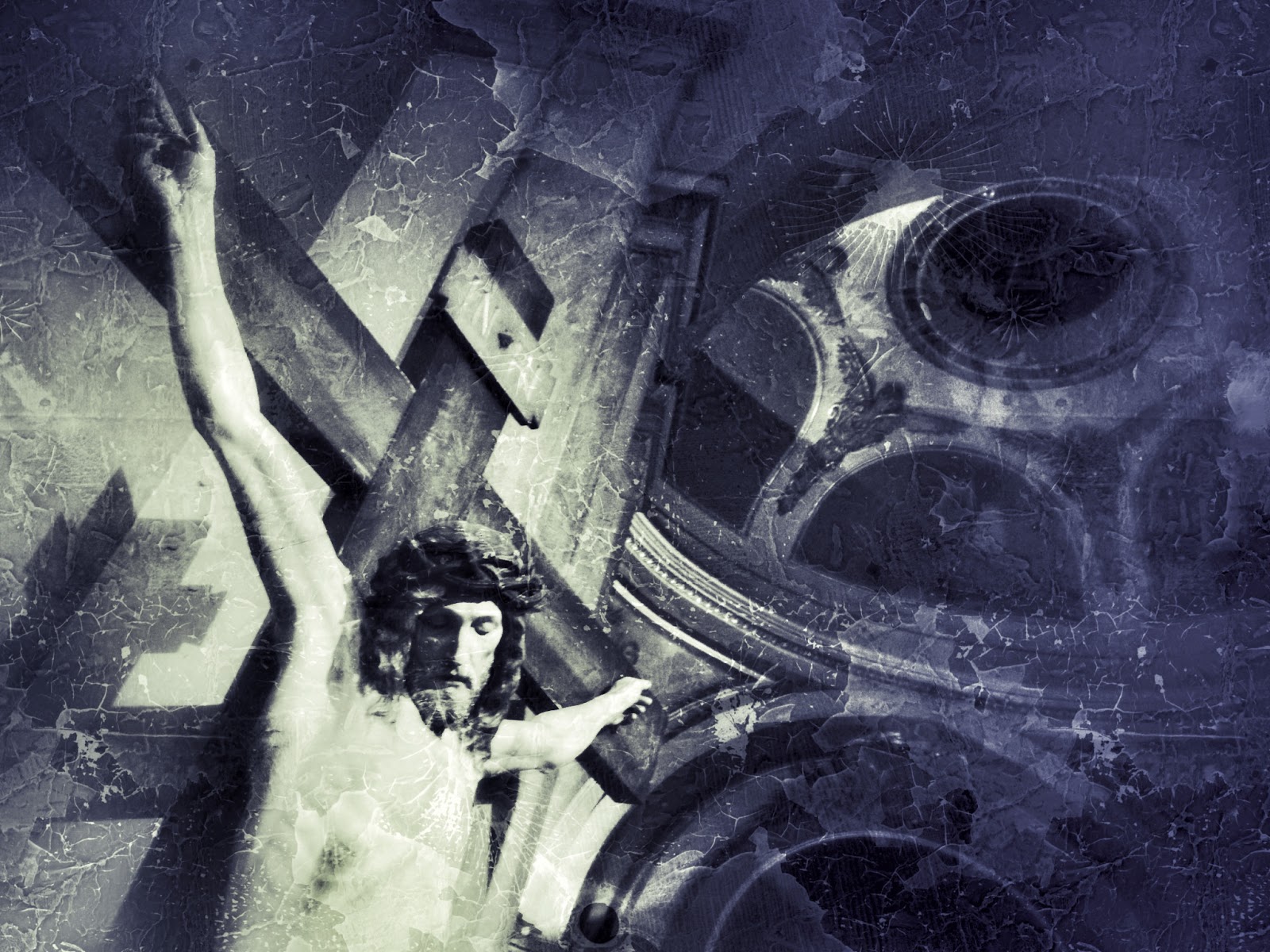
Today we visited a church and a cemetary in the city, both very photogenic. I didn't want to bring any serious cameras, so I used my iPhone for all photography. And some iPhone filters.

25 November 2012
Antarctica, here we come!
We're off to Antarctica. Last year was fun, but this time Daniella will join me, so she can carry my gear. Just kidding, she's got loads of stuff herself - mostly video gear. We'll be starting from Ushuaia and sail straight down to the Antarctic peninsula for hopefully some great landings.
There will be little or no internet facilities, so if you send us an email it may take us a little longer than usual to respond.
24 November 2012
Seminar Workflow in Belgium
Today we spent the whole day in Antwerp, Belgium, where I gave another Squiver seminar: Nature Photography - From the basic idea to the final print. A big thank you to all participants!

23 November 2012
Presentation at VNFE
Yesterday I gave a presentation at VNFE, a well known nature photography camera club in The Netherlands. Lots of people showed up, and it was nice to finally meet some of the people behind the names that I knew only from photography fora and Facebook. Thank you all for showing up, it was fun!
16 November 2012
AF-S 24-70/2.8 to the Emergency Room
Something weird happened to my 24-70. On the Wildlife Bootcamp in Spain last month I first noticed that the zoom ring was not moving as smoothly anymore. I thought it was probably the weather and didn't pay much attention to it. But every time I used the lens, it was getting more and more stiff.
Then suddenly one day there was a new symptom: the zoom ring got stuck somewhere around 50mm. I could still zoom out to 24, but when zooming in, the ring stopped at 50mm. As a result I didn't use it as much on this trip, but every time I did, the zoom ring got stuck at a different focal length. Yes, very weird. And when I say stuck, I mean really stuck as if something mechanical on the inside of the lens stopped it.
When I got back home, I brought it to Nikon Service Center for repairs. Today it was ready to be picked up again. Obviously, my first question was what was wrong with the lens and what caused it. Their answer: the lens had been dropped or something had hit the lens. Right. I knew that I hadn't dropped the lens, nor that anything had hit it. But they insisted that they could see damage that could only have been caused by some sort of heavy impact. I still don't believe this is what has caused the defect, but what do you do?

They replaced: Guide Roller T=4.99, Rubber Ring, 1st Lens Lead Ring, Lens Hood Fixed Ring Unit. Total costs: 335 Euros! That's roughly the price of a brand new Nikon D3100 body and an extra battery...
Update 28/12: On my trip to Antarctica I met a German photographer who had exactly the same problems with the same lens. He also said that he had not dropped or bumped his lens. What's going on?
07 November 2012
Double Light
A couple of weeks ago I posted an image here of Turret Arch shot
through North Window, and I included Daniella to add some scale
to the shot and to make it slightly different from the kazillion other
images that have been shot at this location.
But I knew that it would take a lot more to create something truly different, so I gave it some serious thought and made a plan. I decided to shoot at night, hope for snow, and use a combination of moonlight and flashlight as I had never seen that before. I thought: night shot + moonlight + stars + snow + flashlight = not very likely to have been shot before :-)
There was only a very small window (sorry) of time to do this, because I wanted a low moon and it needed to rise at a certain angle or else there would be large shadows of the rocks behind me creeping into the shot. The inside of the arch was lit by Daniella during part of the exposure with a Surefire Invictus, the flashlight of the gods.

But I knew that it would take a lot more to create something truly different, so I gave it some serious thought and made a plan. I decided to shoot at night, hope for snow, and use a combination of moonlight and flashlight as I had never seen that before. I thought: night shot + moonlight + stars + snow + flashlight = not very likely to have been shot before :-)
There was only a very small window (sorry) of time to do this, because I wanted a low moon and it needed to rise at a certain angle or else there would be large shadows of the rocks behind me creeping into the shot. The inside of the arch was lit by Daniella during part of the exposure with a Surefire Invictus, the flashlight of the gods.
31 October 2012
New Tour In South Africa: Tigers & Leopards
Earlier this year I was on assignment for National Geographic Traveler in India to shoot for an article on tiger safaris. I was there for a week and visited both Bandhavgarh and Ranthambore, their most famous tiger parks. It turned out to be a very frustrating experience - only on our very last game drive did we see a tiger. One tiger. After sunset. On the road. Hardly the ideal conditions for a good photograph.
Tigers are indigenous to Asia and there are many companies that offer photo tours to India, where they visit the same two parks which are supposed to be the best. But chances of you actually seeing a tiger are small, and seeing one in good photography conditions are even smaller. Unfortunately, chances of seeing a tiger in the wild are diminishing further every year, as tiger conservation on the Asian continent does not seem to be very successful. Numbers are decreasing rapidly and necessary measures, like properly fencing the national parks, are not taken.
This has always been the main reason we have never organized a tiger photography tour before - you simply can't promise good tiger sightings in those parks if you only have limited time. Another reason is that the famous tiger parks are heavily overcrowded with tourists and vehicles, and that you have to be extremely lucky to be in a good position for photography when you arrive at a sighting. Been there, done that.
And the fact that I saw just one tiger during that whole week does make one wonder how many tigers are actually still left in the national parks. Once the tiger is lost to the parks, so is the tourist potential and so too is the vital income needed to save the tiger from poachers. It’s a downward spiral.
But even though my first tiger encounter was short and far from ideal, I was impressed with this incredibly pretty cat and I was determined to get better pictures.
Tigers in South Africa?
This year we met John Varty, also known as JV. A man who has been wild about big cats most of his life. He came up with a highly controversial plan to do something about tiger conservation. His idea was to create a free-ranging, self-sustaining tiger population outside Asia. In South Africa, to be precise.
Because of his vast knowledge of wildlife conservation and his success with leopards in Londolozi, JV was invited to visit India and he offered his advise on how to improve the living conditions of the tiger. When it became clear to JV that nothing was going to change in the way tiger conservation was handled in India, he decided to take matters into his own hands.
In 2000 JV came up with the idea to buy huge stretches of farmland in South Africa and start a new game reserve - one where tigers could roam in the wild, hunting on their own, living free while protected by a huge fence; to keep the tigers in and the poachers out.
In the beginning he was criticized by conservationists, who questioned the value of what he was doing, but he hung on and continued to work with his two original tigers that came from a zoo in the USA. Two additional captive bred tigers were added to the mix and were rehabilitated to the wild, and soon the first litters were born.
In December 2010 there were already 16 tigers in the sanctuary, and it is currently the most successful tiger conservation project in the world when it comes to rapidly increasing numbers of tigers.
Meanwhile, things are changing and the world has caught up a bit with JV’s wild thinking and his “Just do it” approach. Recent news that all the tigers have disappeared from Panna, one of India’s leading reserves, when just 2 years ago there was still a healthy population of 24, has somewhat vindicated Varty’s big idea. Maybe he was not so crazy after all.
We visited JV earlier this year, spent a few days with the tigers, and we were very impressed. The tiger sanctuary is huge, the tigers have loads of space, they can hunt for themselves, and they are well protected from the outside world by a state of the art fence. We had so many good photo opportunities with the tigers, that we were instantly convinced that this is the place to go if you want good tiger images. So we decided to organize a tour to this remarkable place.

The sanctuary offers us a unique view into the life of the tiger. As the tigers are used to vehicles, we will be able to see them up close in the African landscape, allowing us to make stunning pictures of these beautiful big cats. And there will be no other tourists, just our group.
You are virtually guaranteed to see tigers on every drive. There are lots of open areas and we are allowed to drive off-road (landscape permitting) to follow a tiger when we find one. The landscape is beautiful and very diverse. There are open plains, hills, rocks, reeds, small streams and ponds. This offers us the opportunity to photograph tigers in all kinds of surroundings and situations: walking, hunting, playing, relaxing, sun bathing, jumping and swimming.
The Leopards Of Sabi Sand
The Sabi Sand Game Reserve is a collection of private game reserves that share unfenced borders with each other and Kruger NP. This allows the free movement of wildlife over more than 2 million hectares of pristine bush.
We stay at Londolozi, one of the most exclusive lodges in the park. You will experience exceptional cuisine and the very best game viewing with some of Africa’s finest rangers and trackers.
But the main reason for choosing Londolozi for our leopard tour is because of the photographic opportunities it has to offer: if you want to get good images of leopards, it just does not get any better than this! We have 2 private vehicles for our group, where you will each have your own row of seats. This allows you to move freely from side to side in the car, with ample room for your gear, and without being bothered by someone sitting next to you, blocking your view.
With over 16,000 hectares of traversing wilderness, no two game drives are ever the same. Trackers sit up at the front of the Land Rover looking for fresh animal tracks, while rangers drive with great skill through ravines and thickets in pursuit of elusive animals. Although the focus of this trip is on leopards, we are a Big Five area, so you may expect to encounter lion, rhino, buffalo and elephant as well.
Breeding herds of elephant and buffalo roam throughout the Londolozi area, while white rhino and lion concentrations are amongst the highest recorded on the African continent. However, it is the truly remarkable relationship between wild free ranging leopards and ranger & trackers which has developed over three decades that has made Londolozi world famous.

There is no disputing that viewing the leopards of Londolozi is one of life’s truly treasured experiences. And it is exactly the reason that we chose this amazing camp to photograph leopards. It is simply the best!
The tour includes daily briefings, in the field instructions, image reviews, and post processing tips.
If you want to join us on this spectacular tour, don't wait too long because the trips are filling fast! We have several departure dates in June and July 2013, but there is limited space available per tour, as we travel in very small groups of just 6 guests.
Check out the Tigers & Leopards Photo Tour page for more information and a detailed PDF.
Hope to see you there!
Marsel
Tigers are indigenous to Asia and there are many companies that offer photo tours to India, where they visit the same two parks which are supposed to be the best. But chances of you actually seeing a tiger are small, and seeing one in good photography conditions are even smaller. Unfortunately, chances of seeing a tiger in the wild are diminishing further every year, as tiger conservation on the Asian continent does not seem to be very successful. Numbers are decreasing rapidly and necessary measures, like properly fencing the national parks, are not taken.
This has always been the main reason we have never organized a tiger photography tour before - you simply can't promise good tiger sightings in those parks if you only have limited time. Another reason is that the famous tiger parks are heavily overcrowded with tourists and vehicles, and that you have to be extremely lucky to be in a good position for photography when you arrive at a sighting. Been there, done that.
And the fact that I saw just one tiger during that whole week does make one wonder how many tigers are actually still left in the national parks. Once the tiger is lost to the parks, so is the tourist potential and so too is the vital income needed to save the tiger from poachers. It’s a downward spiral.
But even though my first tiger encounter was short and far from ideal, I was impressed with this incredibly pretty cat and I was determined to get better pictures.
Tigers in South Africa?
This year we met John Varty, also known as JV. A man who has been wild about big cats most of his life. He came up with a highly controversial plan to do something about tiger conservation. His idea was to create a free-ranging, self-sustaining tiger population outside Asia. In South Africa, to be precise.
This tour impression video was shot & edited by Daniëlla
In 2000 JV came up with the idea to buy huge stretches of farmland in South Africa and start a new game reserve - one where tigers could roam in the wild, hunting on their own, living free while protected by a huge fence; to keep the tigers in and the poachers out.
In the beginning he was criticized by conservationists, who questioned the value of what he was doing, but he hung on and continued to work with his two original tigers that came from a zoo in the USA. Two additional captive bred tigers were added to the mix and were rehabilitated to the wild, and soon the first litters were born.
In December 2010 there were already 16 tigers in the sanctuary, and it is currently the most successful tiger conservation project in the world when it comes to rapidly increasing numbers of tigers.
Meanwhile, things are changing and the world has caught up a bit with JV’s wild thinking and his “Just do it” approach. Recent news that all the tigers have disappeared from Panna, one of India’s leading reserves, when just 2 years ago there was still a healthy population of 24, has somewhat vindicated Varty’s big idea. Maybe he was not so crazy after all.
We visited JV earlier this year, spent a few days with the tigers, and we were very impressed. The tiger sanctuary is huge, the tigers have loads of space, they can hunt for themselves, and they are well protected from the outside world by a state of the art fence. We had so many good photo opportunities with the tigers, that we were instantly convinced that this is the place to go if you want good tiger images. So we decided to organize a tour to this remarkable place.
The sanctuary offers us a unique view into the life of the tiger. As the tigers are used to vehicles, we will be able to see them up close in the African landscape, allowing us to make stunning pictures of these beautiful big cats. And there will be no other tourists, just our group.
You are virtually guaranteed to see tigers on every drive. There are lots of open areas and we are allowed to drive off-road (landscape permitting) to follow a tiger when we find one. The landscape is beautiful and very diverse. There are open plains, hills, rocks, reeds, small streams and ponds. This offers us the opportunity to photograph tigers in all kinds of surroundings and situations: walking, hunting, playing, relaxing, sun bathing, jumping and swimming.
The Leopards Of Sabi Sand
The Sabi Sand Game Reserve is a collection of private game reserves that share unfenced borders with each other and Kruger NP. This allows the free movement of wildlife over more than 2 million hectares of pristine bush.
We stay at Londolozi, one of the most exclusive lodges in the park. You will experience exceptional cuisine and the very best game viewing with some of Africa’s finest rangers and trackers.
But the main reason for choosing Londolozi for our leopard tour is because of the photographic opportunities it has to offer: if you want to get good images of leopards, it just does not get any better than this! We have 2 private vehicles for our group, where you will each have your own row of seats. This allows you to move freely from side to side in the car, with ample room for your gear, and without being bothered by someone sitting next to you, blocking your view.
With over 16,000 hectares of traversing wilderness, no two game drives are ever the same. Trackers sit up at the front of the Land Rover looking for fresh animal tracks, while rangers drive with great skill through ravines and thickets in pursuit of elusive animals. Although the focus of this trip is on leopards, we are a Big Five area, so you may expect to encounter lion, rhino, buffalo and elephant as well.
Breeding herds of elephant and buffalo roam throughout the Londolozi area, while white rhino and lion concentrations are amongst the highest recorded on the African continent. However, it is the truly remarkable relationship between wild free ranging leopards and ranger & trackers which has developed over three decades that has made Londolozi world famous.
There is no disputing that viewing the leopards of Londolozi is one of life’s truly treasured experiences. And it is exactly the reason that we chose this amazing camp to photograph leopards. It is simply the best!
The tour includes daily briefings, in the field instructions, image reviews, and post processing tips.
If you want to join us on this spectacular tour, don't wait too long because the trips are filling fast! We have several departure dates in June and July 2013, but there is limited space available per tour, as we travel in very small groups of just 6 guests.
Check out the Tigers & Leopards Photo Tour page for more information and a detailed PDF.
Hope to see you there!
Marsel
29 October 2012
Nature's Best Awards 2012
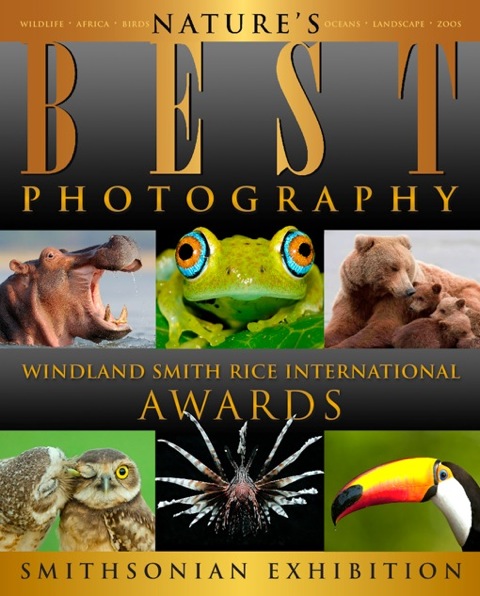
This year's results of the 2012 Nature’s Best International Photography Awards have been announced, and the hippo shot that I took on the Beyond The Great Rivers tour in Zambia (see previous blog post) was chosen as a Highly Honored winner.
It was also picked as one of the cover images for the Fall/Winter issue.
Selected from nearly 20,000 images from photographers in 46 countries, some 500 photos made it into the semi-final round of judging and only 129 images made it to the finals. A selection of Highly Honored winners will be displayed in the annual photo exhibition at the Smithsonian's Museum of Natural History in Washington D.C. opening June 2013.

 Posts
Posts


